Moving Forward
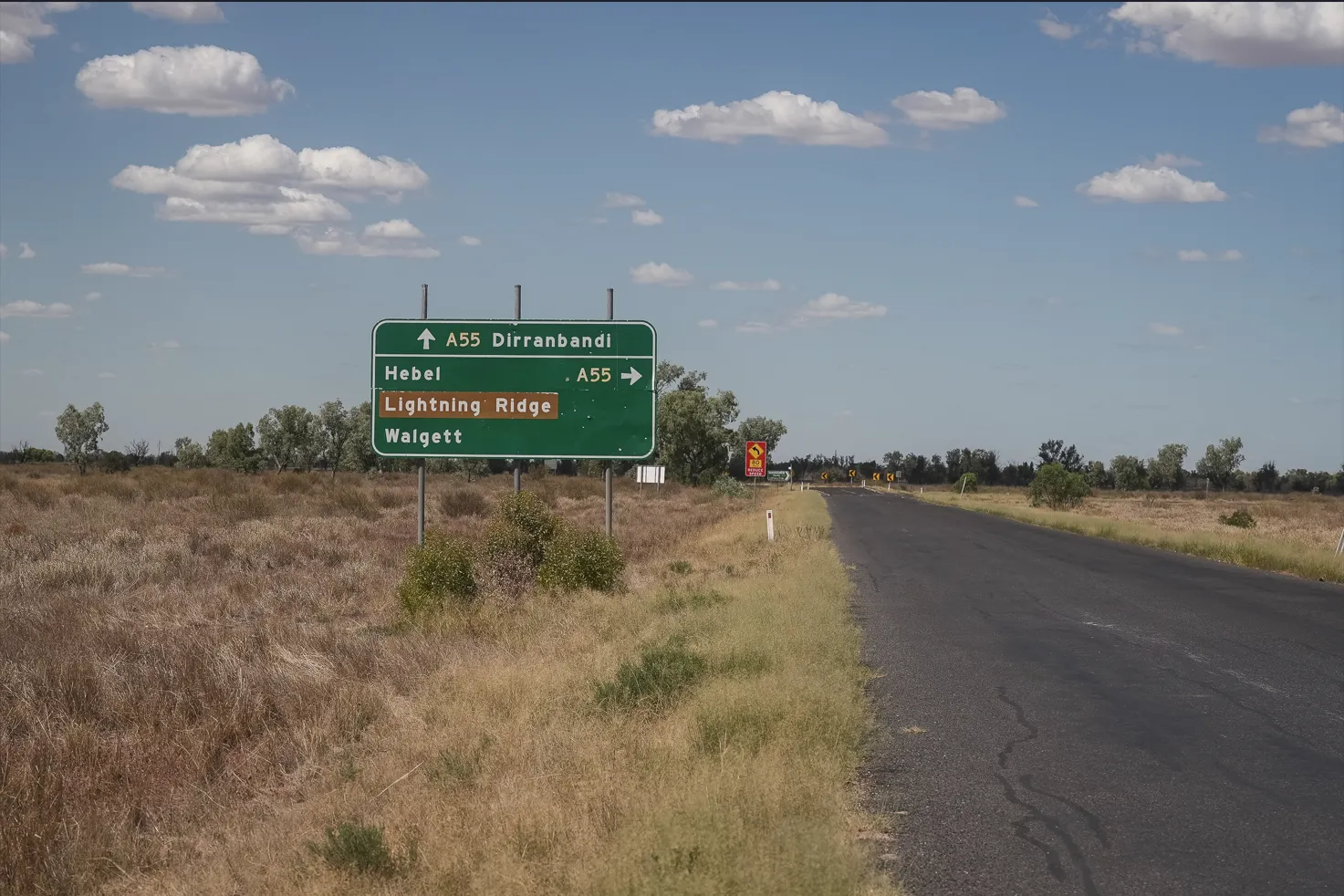
Which way forward for the Lower Balonne? We are coming to a crossroads.
If we can see a greater level of connectivity and the water trust has actually been the forefront or been a part of that discussion and resourcing the discussion, I think that's an outstanding thing
How change could unfold
Looking ahead, different scenarios could emerge, often in combination. Some options, like fishways, may be rolled out gradually over years of planning, design and construction. Others, such as event-based mechanisms, could respond flexibly to conditions as they arise. Progress will rely on an evidence-based, collaborative approach that brings scientific, local and cultural knowledge together, alongside stronger cross-border conversations. Watertrust can support several discussions at once and, with permission, share insights across them. By staying connected, tracking what works, and adapting over time, locally led solutions can continue to grow.
Event-based mechanisms in play
Here is a summary of how the EBM playbook could have played out over 20 years like the most recent.
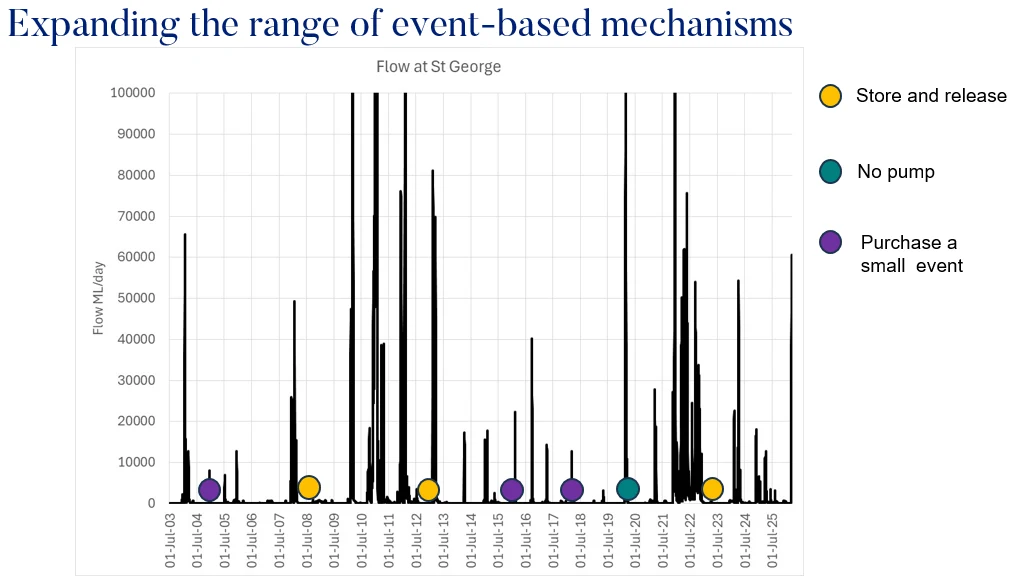
Over a recent 20-year span, different event-based mechanisms come into play at different times as flow passes St George and enters the Lower Balonne, rather than relying on any single intervention.
What each option might achieve
- Low or no expected improvement
- Some expected improvement
- Moderate expected improvement
- Strong expected improvement
| Option | Low-flow connectivity | Refuge pool condition | Floodplain condition | Narran Lakes condition | Indicative cost |
|---|---|---|---|---|---|
| Moderate expected improvement | Moderate expected improvement | Low or no expected improvement | Moderate expected improvement | Highest indicative cost | |
| Strong expected improvement | Strong expected improvement | Some expected improvement | Moderate expected improvement | Very high indicative cost | |
| Moderate expected improvement | Moderate expected improvement | Some expected improvement | Moderate expected improvement | High indicative cost | |
| Low or no expected improvement | Strong expected improvement | Low or no expected improvement | Low or no expected improvement | Moderate indicative cost | |
| Some expected improvement | Moderate expected improvement | Moderate expected improvement | Low or no expected improvement | Lower indicative cost | |
| Strong expected improvement | Strong expected improvement | Low or no expected improvement | Moderate expected improvement | Lowest indicative cost |
Indicative relative cost only. The order reflects current advice that these options likely fall roughly from higher to lower cost. No dollar estimates are implied.
Select an option above to see what it might achieve.
Healthy rivers support not only ecosystems, but cultural values, practices and connections that have endured over generations.
Keeping a waterhole out of the red
Here is one way to show how a store-and-release EBM prevented a moderate waterhole from going into the red, very stressed.
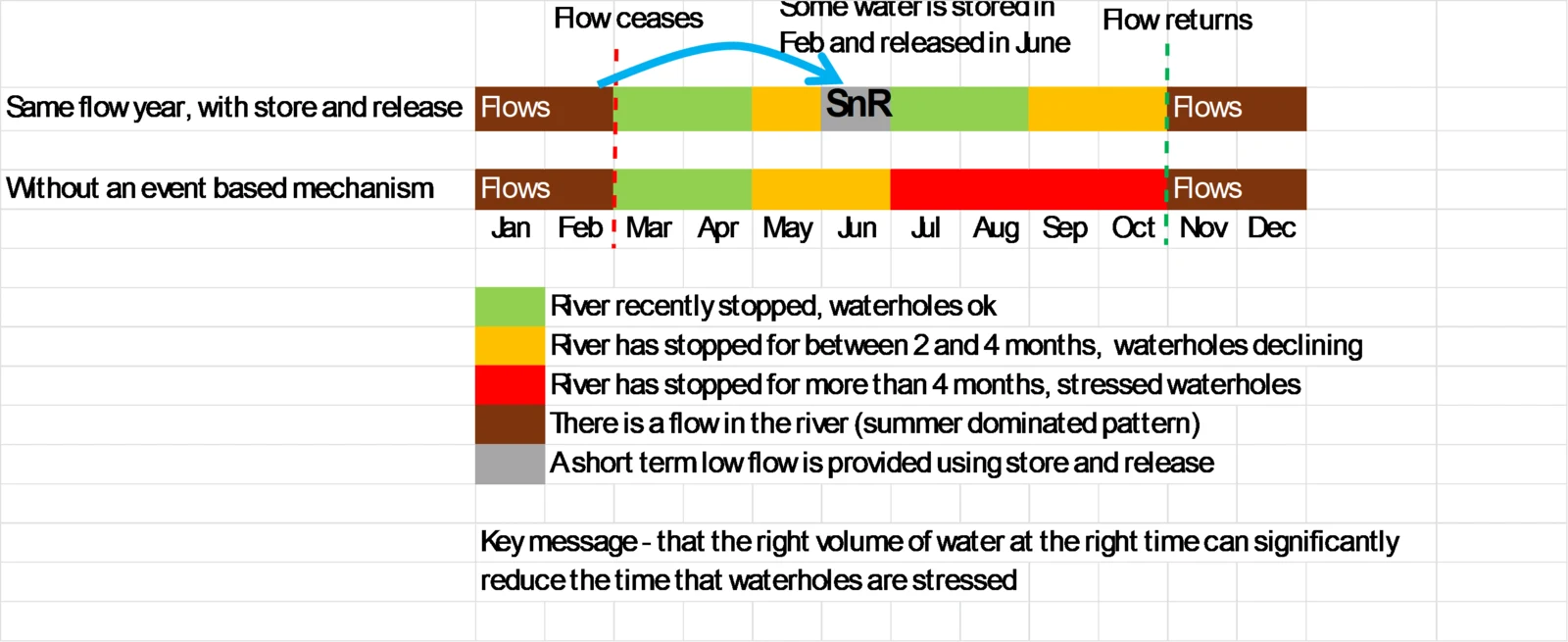
A short-term low flow provided in June keeps a moderate waterhole above the very stressed red zone that the no-action case crosses, showing how a store-and-release mechanism can prevent severe stress.
A deliberative process over the next couple of years
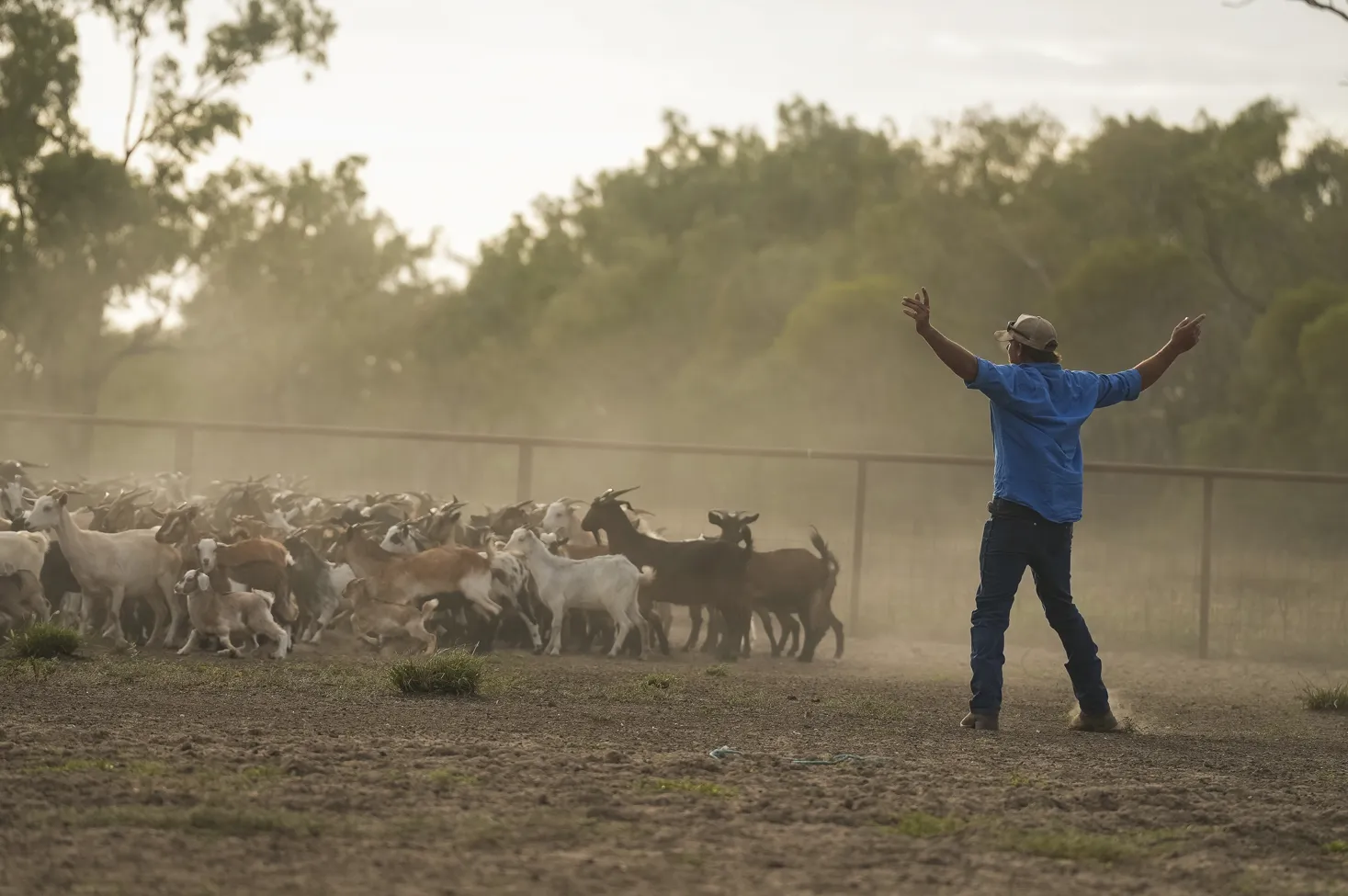
People around here really care about their patch. Some have operated big private storages for years; others have watched the river and wondered where the water's gone. They know its highs and lows and want a say in what comes next for their kids and grandkids. There's a real chance to learn more together, work with knowledgeable people they trust, and shape practical, local solutions through the deliberative process run by Watertrust over the next couple of years.
Respect, trust and connection
Deliberative processes start with respect, trust and connection. Locals have provided a warm bush welcome to Watertrust.
Running a deliberative process always involves working with locals.
Sometimes running a deliberative process means following locals.
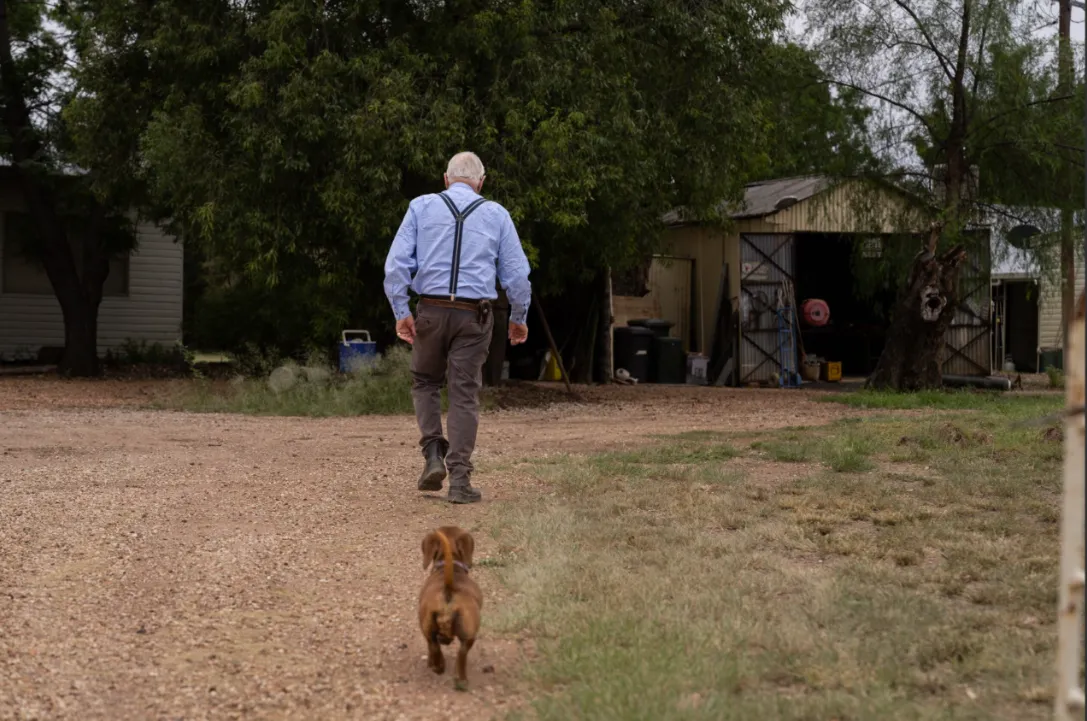
Sometimes it means being a little ahead of locals for a short time.
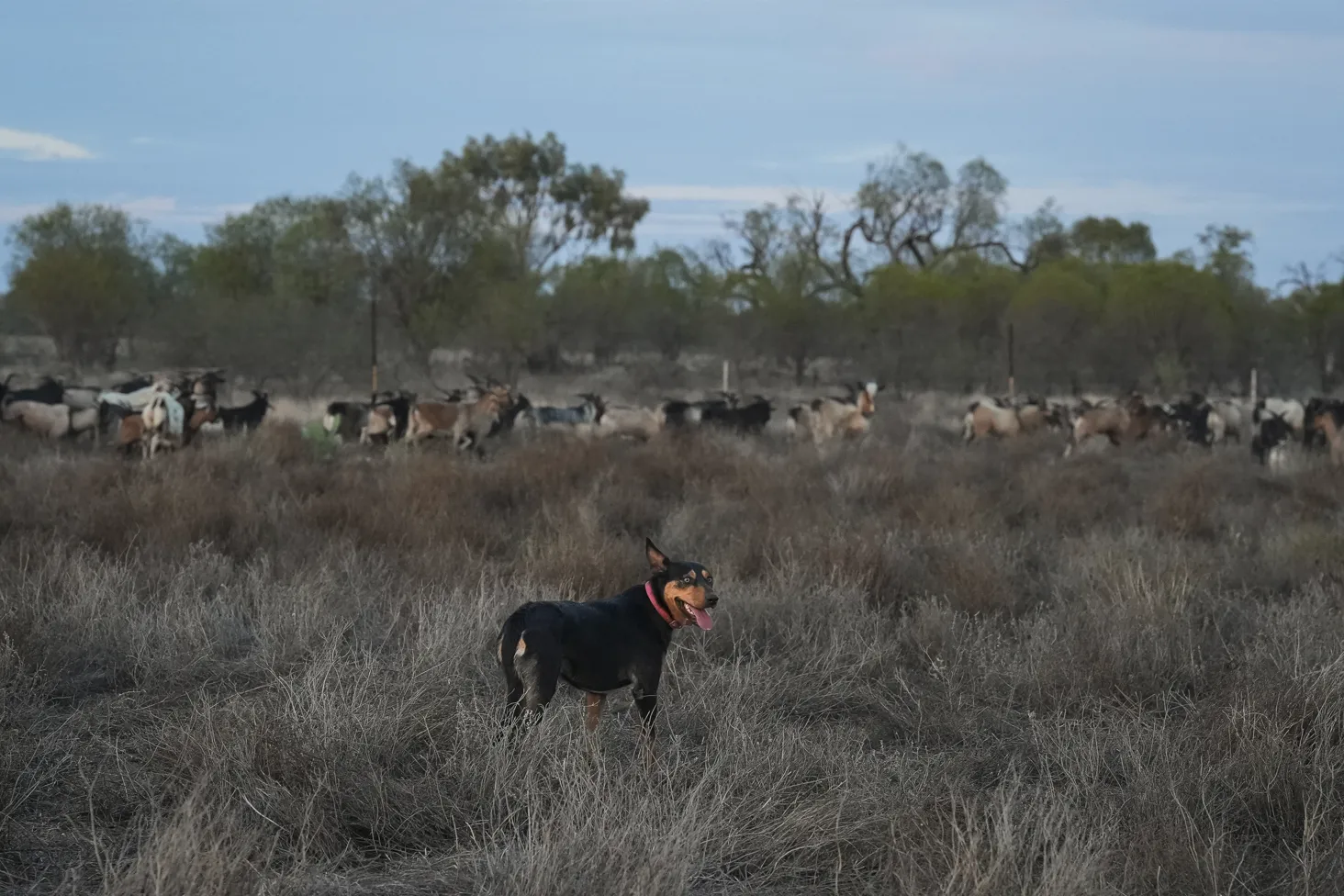
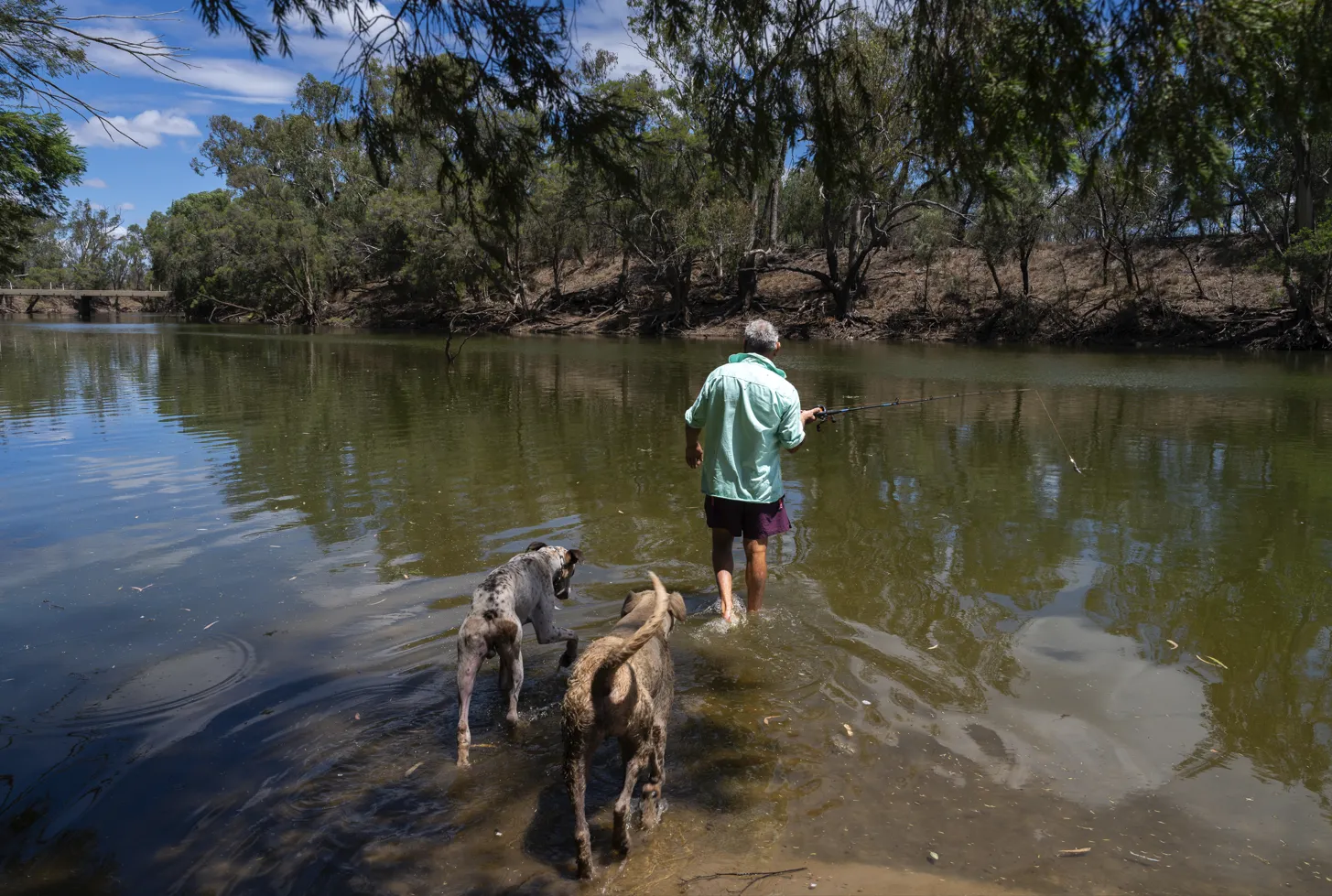
Sometimes it means being along for the ride, ready to offer a hand or paw when needed.
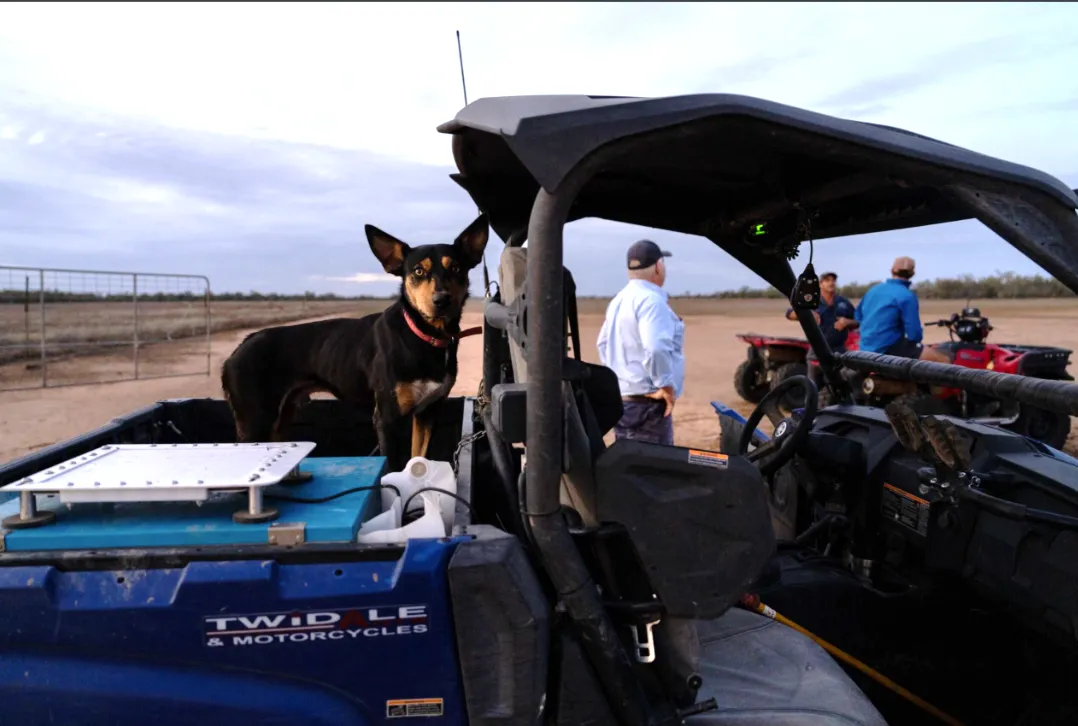
But usually, running a deliberative process means walking side by side with locals.
Watertrust will keep this updated
Watertrust Australia will progressively update this website, particularly to share information about low flow connectivity options, cultural flows, and social and economic aspects. We look forward to feedback.